Field of Science

Showing posts with label On travel. Show all posts

Laying to rest an old myth about Chinese

I just got back from my second research trip to Taiwan in three years (with another planned soon!) and fourth trip overall. As always, I had a great time and ate as much beef noodle soup as I could manage.


As always, I spent a couple months beforehand brushing up my reading and writing. This isn't something I have to do before trips to Spain or Russia. A few hours spent learning Spanish or Russian orthography, and you are set for life. As soon as I blink, I forget how to read and write Chinese. This is because, as is well known, rather than a couple dozen phonetic symbols, Chinese employs thousands of easily-confusable characters which, if you don't use for a while, you end up confusing.

This isn't just a problem for foreigners. Students in Taiwan (and China or Japan, I assume) continue investing significant amounts of time into learning to read and write additional characters well through secondary school. This raises the question of why Chinese-speakers don't just adopt a phonetic writing system?

Problems with a Chinese phonetic writing system

The argument one often hears is that Chinese has so many homophones (words that sounds like), that if you wrote them all the same way, there would be so much ambiguity that it would be impossible to read. The character system solves this by having different characters for different words, even ones that sound alike.

In the last century, when switching to a phonetic system was proposed, a scholar illustrated this problem with the following poem, which reads something like this:
Shi shi shi shi shi shi, shi shi, shi shi shi shi. Shi shi shi shi shi shi shi shi shi, shi shi shi shi shi, shi shi, shi shi shi shi shi. Shi shi shi shi shi, shi shi shi, shi shi shi shi shi shi. Shi shi shi shi shi shi, shi shi shi. Shi shi shi, shi shi shi shi shi shi. Shi shi shi, shi shi shi shi shi shi shi shi. Shi shi shi shi shi shi shi shi shi shi shi shi shi. Shi shi shi shi.
As written, this is incomprehensible. Only if you write it in characters
the meaning becomes clear:
A poet named Shi lived in a stone house and liked to eat lion flesh and he vowed to eat ten of them. He used to go to the market in search of lions and one day chanced to see ten of them there. Shi killed the lions with arrows and picked up their bodies carrying them back to his stone house. His house was dripping with water so he requested that his servants proceed to dry it. Then he began to try to eat the bodies of the ten lions. It was only then he realized that these were in fact ten lions made of stone. Try to explain the riddle.
Problems with this argument

This argument sounds compelling until you realize that what is being claimed is that you can't understand a Chinese sentence based on its sound alone. This means that not only is it impossible to understand phonetically-written Chinese, it is impossible to understand spoken Chinese (which, like phonetically-written Chinese, doesn't have any characters to help disambiguate similar-sounding words). Since a billion people speak Mandarin Chinese every day, there must be a problem with this argument!

There are a few. First of all, I wrote the poem phonetically ignoring the five Chinese tones. Like many languages, Chinese uses intonation phonetically -- an 'i' with a rising tone is different from an 'i' with a falling tone. Writing a tonal language without tones is like writing English without vowels -- much harder to read. Similarly, the phonetic writing above does not have any breaks between words, making it much harder to read (imaginewritingEnglishwithoutspacesbetweenwords). True, written Chinese doesn't mark word boundaries, but then it has all the extra information encoded in the characters to help with any ambiguity.

Second, this poem uses very archaic Chinese (different vocabulary and different grammar than modern Mandarin). It's not clear how many people would understand the poem spoken aloud. Wikipedia gives a nice translation of the poem into modern Mandarin, which involves many different sounds, not just 'shi'.

The most important problem is that there actually is a perfectly good phonetic system for writing Chinese. Actually, there are several, but the most common is pinyin. People can and do write entire texts in pinyin.

Why care? 

Why go to the effort of debunking this myth? This often comes up in arguments over whether the Chinese should adopt a new writing system, but that's not really my concern. Very often, there is a tendency to believe that different cultures and languages are much more different from one another than they are. One hears about strange aspects of other languages without even pausing to think about the fact that your own language has many of those same features. The writing systems of English and Chinese are actually alike in many ways (both are partially phonetic and partially semantic -- a topic for a different post). I can only speak for myself, but the more I learn about a given language, usually the less foreign it seems. Which is a fact worth thinking about.

Zipcar

I've been an advocate for and member of Zipcar since my wife and I moved to Boston four and a half years ago. For that time period, I thought Zipcar was in every way superior to owning a car. Until last week, anyway. Now I'm reconsidering the car ownership issue.

Own or rent? That's the question.

It begins

I was already unhappy early in the week, having discovered Zipcar had overcharged us $375 over the past few months. At the beginning of August, I had added my wife as a driver on our account (we'd always had just one driver to save on the yearly membership fee) and also upgraded us to a fixed $75/month plan (which has some added benefits), having noticed that we'd spent more than $75 pretty much every month for the last year. I confirmed carefully with the representative that we would only be billed $75 combined, not $75 each.

It turns out, the hapless representative, rather than simply putting two of us on one account, made two accounts and put us each on both, and then charged us each every month. I didn't notice earlier as the charges appeared on different accounts, and I thought we only had one account, but the credit card charges were looking suspiciously large. It took a series of emails and a phone call to get that straightened out. They eventually agreed to refund us the bogus charges "as a one-time courtesy." That's a direct quote.

Thursday


We had an overnight trip to our favorite New England B&B for Christmas weekend (seriously, this place is fantastic and has one of the best restaurants I've been to anywhere in the world).

Our room was even more charming than it looks. Yes, that's a working fireplace.

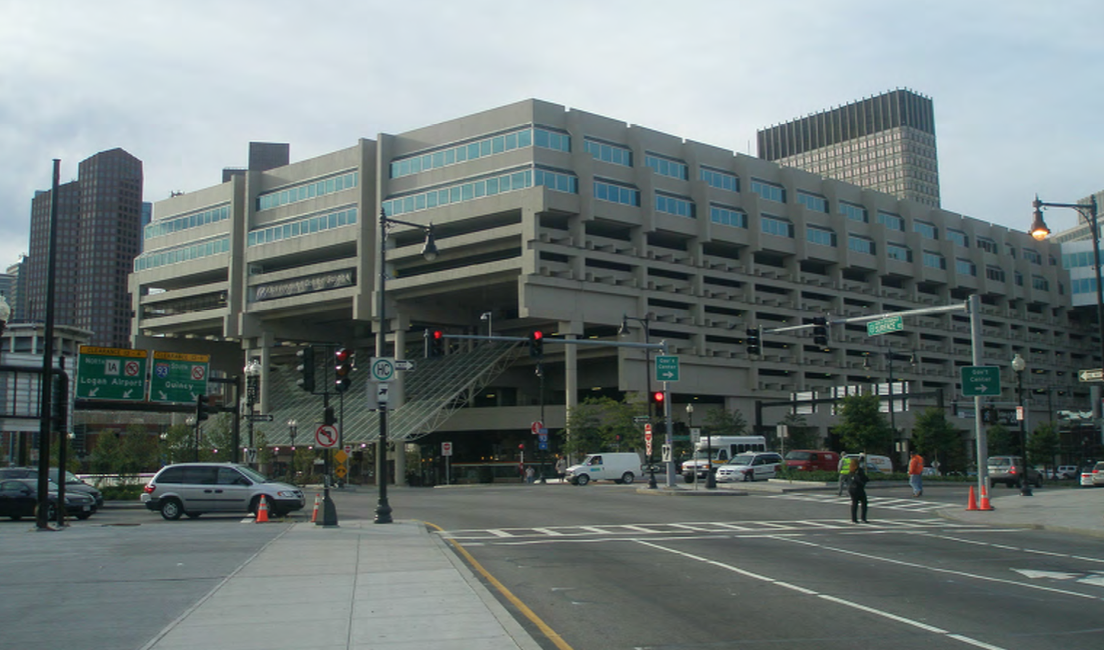
As usual, I booked a Zipcar for the purpose. I believe it was a Nissan Sentra, helpfully parked in our apartment building's garage. On Thursday, I got an email from Zipcar saying that due to an unforeseen circumstance, they were bumping us to a Civic in the Government Center garage.

The exterior of the building is distinctive.

I've rented cars once or twice from that location. During the day, it's ok. At night, it's spooky as hell. I'd say it's deserted, but there are occasionally roving bans of teens doing who knows what.


I couldn't find a good picture of the interior.
This illustration is true to the spirit of the place.


So I emailed Zipcar, explaining that I didn't really like returning cars to that location at night, so was there maybe another car nearby I could use. Or could the Civic be relocated somewhere more pleasant for a couple days?

Friday


I don't know if anybody read that email, since I never got a reply. I did get another email on Friday, though, saying that due to another unforeseen circumstance, my reservation had been moved to a Smart Car parked in Somerville (a 15-20 minute drive from where we live).

Did I mention that the B&B was a 3 hour drive away? I didn't really want to drive a Smart Car on the highway for 3 hours, and I wasn't sure our stuff would fit (I had planned on bringing skiis). So I emailed, saying if I it was a choice between a Civic parked in the Dungeon of Dispair or a Smart Car, I'd take my chances with the dungeon.

This time, I got a quick email saying there were no other cars available. So I called and explained my situation. A very polite representative explained that there really were no other cars nearby, but would I take a Mazda 3 in Arlington (3 suburbs out from Boston, where I live)? They'd pick up the cab fare. Either that, or I could have $200 towards some other form of transportation. Or I could cancel my reservation. $200 wasn't going to cover a standard car rental (I checked), and the B&B reservation was nonrefundable (plus we'd been looking forward to it), so we went with the car in Arlington.

Saturday

We took a cab out to Arlington in the morning. It took maybe 20 minutes (we helpfully live next to I-93, making getting out of the city easy -- Thank you, Tip O'Neil and Ted Kennedy) and cost $33.75.

We'd only just gotten back onto I-93 in the direction of Vermont when there was a loud pop under the car and it sounded like something was dragging. On inspection (I took the next exit and pulled over), there was some piece of plastic hanging loose. The plastic itself didn't look problematic, but I wasn't sure what it had previously been holding in place. So I called Zipcar.

The representative agreed that the car was not safe to drive and asked us to return the car to its original location, and could we perhaps take a Prius from Wellesley College instead? If we needed a cab ride, they'd cover the fare. I pointed out that (a) we were already running pretty late, and (b) a cab fare to Wellesley was going to be pretty serious, esp. on top of our cab fare to Arlington, so could I just drive the car to Wellesley, drop it off there and take the Prius. She said that wasn't possible, since when the mechanics came out to service the Mazda, they wouldn't know where it was. I said if that was the problem, I was happy to tell the mechanics that the car was in Wellesley.

She put me on hold.

After a brief wait, she came back on the line to apologize, saying she hadn't gotten permission to drop the car off in Wellesley. Did I want to make the switch anyway? Or there was another car in Salem, MA, if we wanted.

Witch trials: Popular entertainment in Salem, MA

I've actually wanted to see Wellesley for a while (I like college towns), so we went with Wellesley. We called yet another cab (have I mentioned this was Christmas? Not a lot of cabs wanting to go to a deserted college town) and went to Wellesley. That fare was $66.05, including a Christmas-appropriate tip.


Finally, we got the Prius and set off. We had been traveling for 2 1/2 hours and were now farther from our destination than when we started.


View Larger Map

Our itinerarary: A: Home, B: Mazda in Arlington, C: Roughly where the car broke, D: Back in Arlington, E: Wellesley College. Vermont is in the North.

Sunday


The rest of Saturday was pretty good, and the B&B was everything we remembered (dinner, which was, as always, excellent, included what may be the perfect bread, from Orchard Hill Breadworks). Sunday morning we heard rumors that a serious blizzard was heading our way, though it wasn't expected to be bad until evening (before we had left, the weather report had put the chance of snow at only 30%). We got a slightly earlier start than we had planned, stopped at a few places on the way back.

Somewhere around 3:30 or 4:00, we entered Massachusetts and it began to snow. The state had put up blizzard warnings on the roads, requesting everyone to get off the road and go home. If we had been going straight home -- as we would have were we driving that much-mourned Sentra -- that wouldn't have been a problem. But we were going to Wellesley.

At least, we tried. As we neared Wellesley, the snow got very bad, and I frankly wasn't that comfortable driving, particularly once we left the highway and the streets weren't as well-plowed. My wife called a cab company to make sure we could get a ride back to Boston. They agreed to take us, but then called back shortly thereafter, saying that nobody was driving anywhere, didn't we know there was a blizzard going on? I think they made the right decision.

I did know there was a commuter rail station in Wellesley. We called the MBTA to see if the trains were still running. They said the trains would most likely run, but with significant delays. The next one wouldn't be for 3 hours. Oh, and the station we'd be waiting at is outside. In a blizzard.

As a backup plan, we checked to see if there was anywhere we could stay in the night in Wellesly. However, as Wellesley doesn't have any hotels, there appeared to be only one option:

The only available room in Wellesley last night.

We called up Zipcar to consult. They agreed to let us leave the car in Boston at no charge, as long as we told them where the car was. I'll give them credit for that decision, at least. We drove home, very slowly.

Monday


I wish I could say the story was over, but this morning I checked my email and saw that we were billed, not only for the Prius, but also for the Mazda 3 (the one that broke down). Plus, there was a late fee for returning the Mazda late. It seems that when the representative switched our rental from the Mazda to the Prius, she did so before we actually got back to Arlington. I sent in another email this morning. We can hope that they'll remove those charges "as a one-time courtesy."

I realize that owning a car has its own hassles. I don't expect Zipcar to be perfect, either. Everyone's allowed a bad week. As long as it's just one week. And as long as they give me my money back.

What did I learn from this experience? What I learned -- and what you should take home from this as well -- is to get your bread from Orchard Hill. Because it is fucking awesome bread.

*Update: Tuesday*


This morning I got a call from someone higher up in customer service at Zipcar, who listened to the whole story. She took the numbers for the cab rides in order to reimburse us directly, rather than my having to send in the receipts, which was nice. She also comped the entire weekend trip and added a $50 driving credit, which I also appreciate. The part I cared about more was that she at least seemed very interested in improving the service such that such problems would not be repeated or would be mitigated more quickly when they do. If this reflects a real commitment to efficient service, then hopefully this last week is an aberration, and we'll be able to go back to trusting and relying on Zipcar, as we have in the past.

*Another Update: Tuesday*


Now the vice president for member services has called to apologize in addition. It's great that they take this stuff seriously. I was going to take a temporary break from Zipcar and use a regular rental car company for some upcoming stuff, but now I think I'll give them another shot.

Ask a stupid question, get a stupid answer

This morning, Slate is running a bizarre feature on transportation. Cities and transportation are in crisis, we're told, and we need new ideas to solve problems of traffic, efficiency, greenhouse gas emissions, etc. We need new ideas to solve the problems of our cities "and so we need new visions for the city."

Alternatively, we could just build what so many cities around the world already have. The article mentions free Wi-Fi in buses (don't we already have that?). A few months ago, I had lunch with a professor from a university in Switzerland. He had recently moved to that university from another university a good 1-2 hours drive away. With his kids in school and a wife with a job, he didn't want to move them. Luckily, there was a high speed train with working Wi-Fi (take that, Bolt Bus!) that only took about an hour each way, so he was commuting in, working on the train both directions.

In Hong Kong, you can check your luggage in at a station in the city center up to 24 hours before your flight. You only have to hop on the express train to the airport just before your flight, so you can enjoy downtown without your luggage on the day you head out of the city. Also downtown in Hong Kong, incidentally, they've built a pedestrian street one floor above the vehicular street, so that pedestrians can walk to and from offices and shops without getting in the way of the traffic -- safer and more convenient.

Anyone who has spent much time traveling abroad knows that the US transportation system is a good half century (or more) behind the more developed parts of the world. Even where our transportation is technologically on par (e.g., of places I've lived, Spain and Russia), it often works better, runs faster and has more geographic coverage. There are many ideas out there -- most of them not new -- that work very well in other countries. So any real discussion would not be about finding clever new ideas, but figuring out how to implement them in the US.

----

This brings up a different question: what happened to Slate? Some years ago, it was the first place I turned for news, but the quality has steadily declined. Some of it is just attrition (e.g., the sublime and irreplaceable movie critic David Edelstein was "replaced" by Dana Stevens). The science coverage has been turned over largely to William Saletan who -- bless his heart -- tried very hard, but simply doesn't know enough about science to understand what he's writing about, leading to articles that are either shallow or just wrong (see here and here). Not that shallow science writing is a problem specific to Slate.

Slate's travel writing used to be incredible, written by interesting folks with deep, deep knowledge of the places they were visiting. So several years ago, when I pitched a piece to Slate about the Trans-Siberian railway, I assumed I never got a response because despite a couple years in Russia, I wasn't up to their level of expertise. Recently, though, Slate's ad critic (generally one of my favorite writers) posted an article about his trip on the Trans-Siberian, written with detailed horror of life in Russia (which he can only observe from a distance, since he's afraid to ride in platskart, which he describes as "P.O.W." camp, but which is more accurately called "a party which begins in Moscow and ends 7 days later in Vladivostok"). Though, in Stevenson's defense, the article wasn't nearly so bad nor so clueless as Daniel Gross's description of his visit to Japan, during which he discovered (wow!) that the Japanese really like things written in English.

Seriously, Slate -- I expect better.

Games with Words in Taiwan

I've been in Taiwan for two weeks, and further posts of the Tutorial will probably wait until I get back next week.

I had an excellent two-day visit to Prof. Su Yi-ching's lab at Tsing Hua University (Qinghua for you pinyin-readers), where I was able to collect an absurd amount of data due to the generosity of Prof. Su and her students (over 110 participants in two written studies, plus three in an eye-tracking study). I also had a great time at Prof. Lee Chia-Ying's very lively lab at Academia Sinica, where I got to observe a kid ERP experiment (something I've never actually seen, though I'm in the process of planning one of my own) and also test several more participants in the eye-tracking study. I also visited Prof. Chueng Hintat at National Taiwan University. I was mildly surprised to discover I actually can discuss my research in Mandarin when necessary, though with most people it was possible to use English (thankfully).

I wasn't at all sure how this trip was going to go when I planned it, as at the time I didn't actually know any psycholinguists in Taiwan. It turns out that there's actually a pretty substantial group of developmental psycholinguists working on interesting problems. Su and Cheung are both in the process of releasing much-needed new child corpora, with Su focusing on (if I remember correctly) optional infinitives (to the extent such can be recognized in a language with no inflectional morphology) and lexical tone, and Cheung focusing on argument structure alternations. Lee's lab is producing some really well-considered studies of character-reading (for instance, looking at how phonetic and semantic radicals are processed). I also heard of several other faculty doing exciting work but whom I didn't have time to visit.

And, of course, I got a lot of data, which is good since Harvard partly funded this trip on the expectation I would run some experiments. The experiments I was running are all similar to the Pronoun Sleuth project -- that is, looking at factors that affect what people think a pronoun means, and trying to replicate some of my findings in English.